








Showing 1–16 of 18 resultsSorted by popularity
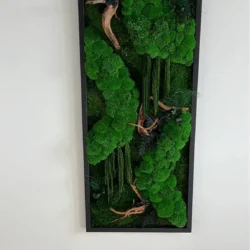
Moss Picture “Ball Moss Jungle Cascade” – Driftwood Edition
Price range: 259.20 $ through 2419.20 $ Exc. Tax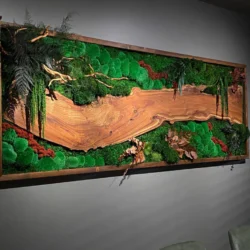
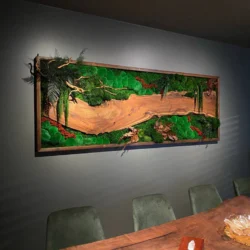
Moss Wall Art with Wood – Walnut Forest Landscape
Price range: 316.80 $ through 3024.00 $ Exc. Tax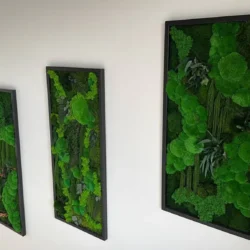
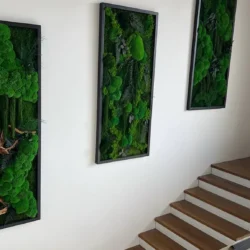
3-Piece Moss Picture Set: Jungle Cascade with Cushion Moss
Price range: 691.20 $ through 5760.00 $ Exc. Tax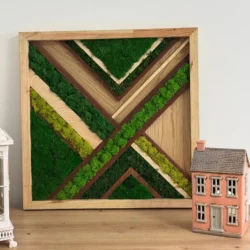
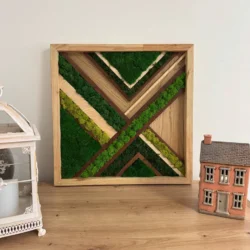
Moss Wood Inlay Wall Art – Geometric Diagonal Pattern
Price range: 230.40 $ through 1944.00 $ Exc. Tax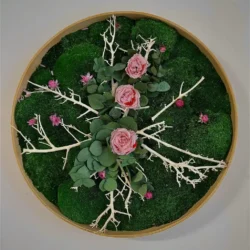
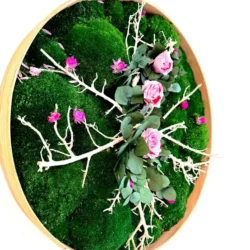
Floral Wall Art with Roses, Moss and Wood
Price range: 216.00 $ through 2160.00 $ Exc. Tax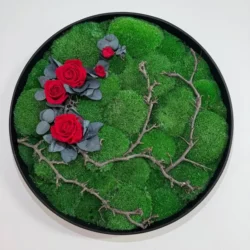
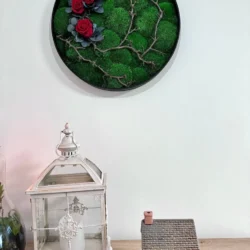
Moss Picture with Roses and Branches
Price range: 216.00 $ through 2160.00 $ Exc. Tax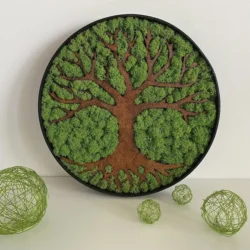
Round Decorative Tree with Moss in Wooden Frame
Price range: 144.00 $ through 1512.00 $ Exc. Tax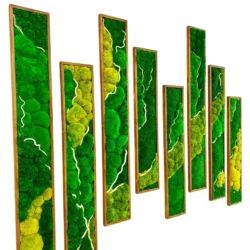
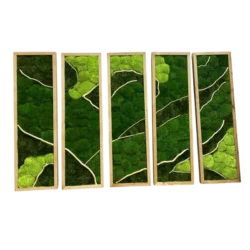
Moss Wall Art Set with Driftwood
Price range: 129.60 $ through 3600.00 $ Exc. Tax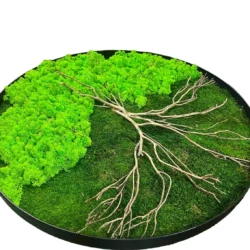
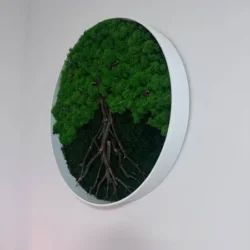
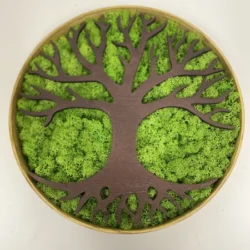
Round Moss Wall Art – Moss Tree | Tree Made of Moss
Price range: 187.20 $ through 1944.00 $ Exc. Tax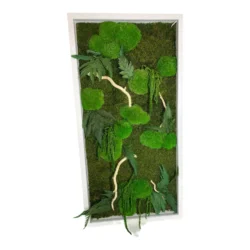
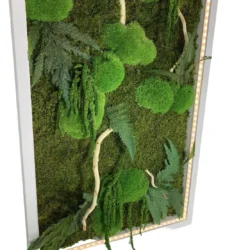
Moss Wall Art with Plants, Driftwood and LED Lighting
Price range: 432.00 $ through 2376.00 $ Exc. Tax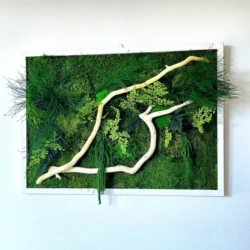
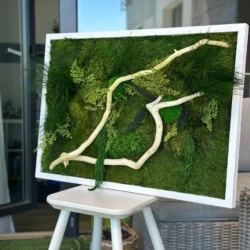
Moss Wall Art with Driftwood and Plants
Price range: 259.20 $ through 2376.00 $ Exc. Tax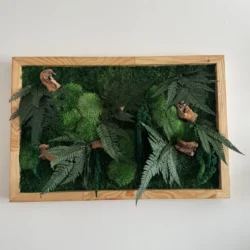
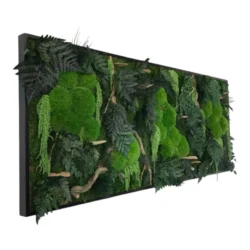
Moss Wall Art with Wood and Plants
Price range: 259.20 $ through 2376.00 $ Exc. Tax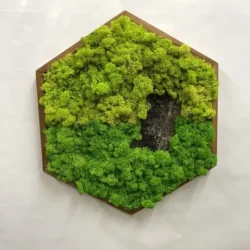
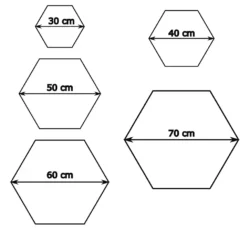
Hexagon Moss Wall Art with Reindeer Moss and Tree Bark
Price range: 115.20 $ through 432.00 $ Exc. Tax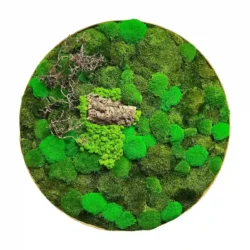
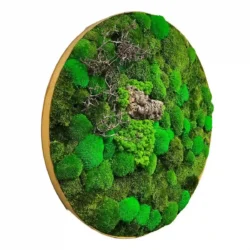
Round Moss Picture with Wood
Price range: 187.20 $ through 1944.00 $ Exc. Tax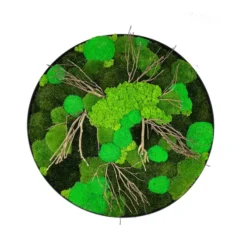
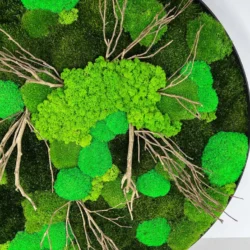
Round Moss Wall Art with Moss and Driftwood
Price range: 187.20 $ through 1944.00 $ Exc. Tax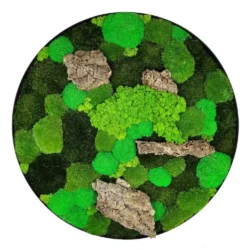
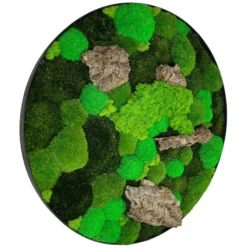
Round Moss Wall Art with Mixed Moss and Driftwood
Price range: 187.20 $ through 1944.00 $ Exc. TaxMoss and wood wall art puts two natural materials in one frame and lets the contrast do the work. Soft against hard, green against brown, something that grew low and damp against something that grew tall and dry.
In moss and wood wall art the timber is structural rather than decorative. In most of these pieces it forms the composition — a branch crossing the panel, a slab defining the horizon, bark building a texture the plants grow around — while the greenery fills what it leaves.
The Wood We Use
- Driftwood — shaped by water, bleached and smoothed, no two pieces alike. The most sculptural material and the hardest to compose with, because you work around the shape you are given.
- Tree bark — deep vertical texture that reads as forest floor at close range.
- Walnut and oak slabs — solid wood with visible grain, usually as a base or a horizon line.
- Cork — light, warm-toned, good for large areas where a solid slab would be too heavy.
- Tinder fungus — the bracket fungus that grows on birch, with a suede-like surface unlike anything else available.
Why Moss and Wood Work Together
Moss and wood wall art works because texture needs contrast to register. A panel of one soft material has depth but no reference point — the eye accepts the whole surface as uniform, however varied it is up close.
Introduce a hard edge and everything changes. A piece of driftwood laid across a bed of preserved plants gives the eye something rigid to measure the softness against, and both materials read as more themselves for the comparison. This is a compositional principle rather than a preference; it is why so much Japanese arrangement works on the same contrast.
The colour relationship helps too. Wood tones sit in the orange-brown range, directly opposite green on the colour wheel, so the two materials intensify each other without either being adjusted.
Interior Styles These Suit
| Interior style | What to look for |
|---|---|
| Rustic and farmhouse | Rough bark, heavy slabs, visible saw marks |
| Japandi and wabi-sabi | Driftwood, asymmetry, restraint — one element, not five |
| Scandinavian | Pale oak, clean lines, muted greens |
| Modern and minimal | Geometric inlay, straight edges, wood as pattern rather than object |
| Biophilic offices | Larger slabs, denser planting, pieces that read from a distance |
How Moss and Wood Compositions Work
Moss wall art with wood follows one compositional rule: the wood leads and the plants respond. A branch placed off-centre, greenery denser on one side than the other, empty space left deliberately — these read as considered.
Symmetrical arrangements rarely succeed with natural wood. A branch centred perfectly in a frame fights its own irregularity, and the result looks like an attempt at order that the material refused. Asymmetry is not a stylistic choice here so much as an acknowledgement of what you are working with.
Where a piece includes several wood elements, they are chosen to relate — similar tone, similar weathering — rather than assembled from whatever was available. Mismatched wood is the fastest way to make a natural composition look accidental.
Two Materials, Two Behaviours
In moss and wood wall art the two materials age differently, and it is worth knowing before you hang a piece.
The greenery holds its colour for 7 to 10 years indoors, then gradually softens in tone. Wood does the opposite: it darkens slightly with age and light exposure, and oak in particular deepens over the first couple of years.
The net effect is that these pieces shift subtly over time rather than staying fixed. Most owners find this a feature — the piece looks slightly different at five years than at one — but if you expect a fixed appearance forever, it is worth knowing.
Moss and Wood Care
Moss and wood wall art needs no watering, feeding or misting. Keep pieces out of direct sunlight, which fades greenery and can dry glued wood joints over years, and away from constant damp — wood responds to humidity swings more than preserved plants do, and in a very wet room it can move enough to stress the joins.
Dust moss and wood wall art with a cool hairdryer on the lowest setting. Exposed wood can be wiped with a dry cloth, carefully, avoiding the planted areas. Never oil or polish the wood in a finished piece: the product wicks into the plant material and stains it permanently.
Moss and Wood Wall Art: Frequently Asked Questions
Is the driftwood real?
Yes, and every piece is different because of it. Photographs show a representative example rather than the exact item you will receive.
Will the wood crack?
Properly dried wood is stable indoors. Very dry heated air over a winter can open small checks in thicker slabs, which is normal in solid wood and not a fault.
Can I choose the wood species?
For custom pieces, yes, within what we have. Driftwood is the exception — we work with the shapes that exist.
Does the wood need oiling?
No, and it should not be oiled once the piece is assembled. The oil spreads into the greenery.
Is it heavier than a standard panel?
Yes, noticeably so with solid slabs. Use fixings rated for the weight, particularly on plasterboard.
Related Collections
For the same material pairing in functional objects, see wooden bowls with moss and wall clocks with moss and wood. All wall formats are under moss wall art.