Showing all 2 resultsSorted by popularity

-31%

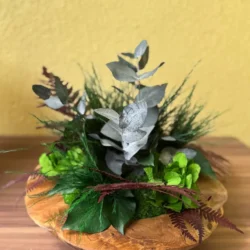
Decorative Wooden Bowl with Reindeer Moss & Plants

Original price was: 207.84 $.Current price is: 144.00 $. Exc. Tax
Select options This product has multiple variants. The options may be chosen on the product page
-31%

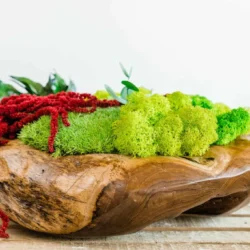
Wooden Bowl 30 cm with Reindeer Moss, Cushion Moss and Plants

Original price was: 207.84 $.Current price is: 144.00 $. Exc. Tax
Select options This product has multiple variants. The options may be chosen on the product page

Every wooden bowl with moss starts as a piece of timber. The bowl is carved first — shaped, hollowed and finished as an object worth having empty — and only then filled with preserved plants.

That order matters. Our moss bowls section covers arrangements where the greenery is the subject and the vessel supports it. Here the wood leads, and the filling is there to set it off.

How the Bowls Are Carved

Each wooden bowl is turned or carved individually, which is visible in the finished piece if you know what to look for: wall thickness that varies slightly around the rim, a base that follows the grain rather than a machined circle, tool marks left deliberately on some pieces.

Grain direction determines everything about how a wooden bowl looks. Cut one way, the timber shows long flowing lines; cut another, tight concentric rings. A carver reads the blank before starting and works to what the wood offers, which is why two bowls from the same tree can look entirely different.

Live edges — where the natural outline of the trunk is left intact on the rim — appear on some pieces. Those are one-offs by definition, since no two trunks give the same edge.

The Timber We Use

Species Tone Character
Teak Warm golden brown Dense and stable; the traditional choice for carved bowls
Paulownia Pale, almost blond Very light in weight; suits large forms without becoming unwieldy
Olive wood Cream with dark streaking The most dramatic figure of the three; every piece unique
Reclaimed hardwood Varies Character marks, old fixing holes, patina from a previous life

All finished with oil rather than lacquer, so the surface keeps some texture and the grain stays legible. Lacquer would be more resistant to marks and would make the wood look like a printed image of itself.

What Goes Inside the Bowl

The moss inside a wooden bowl is restrained, deliberately. On a piece where the wood is the point, an overflowing arrangement hides exactly what you paid for.

The usual approach is a dense low bed of reindeer or cushion material sitting below the rim line, so the profile of the bowl stays fully visible from the side. Accents — preserved ferns, grasses, occasionally a rose — stay within that profile rather than rising above it.

Seen from above, you get greenery. Seen from across a room at table height, you get the silhouette of the bowl. Both readings work, which is not true of a bowl filled to overflowing.

Wooden Bowls and Humidity

A solid wooden bowl responds to the air around it. In a damp room it takes on moisture and swells slightly; in dry heated air it gives moisture up and contracts. Over years, large swings can open fine cracks along the grain.

This is normal behaviour in solid wood rather than a fault, and it is why a hand-carved bowl belongs on a dining table or console and not on a bathroom shelf or directly above a radiator. Steady conditions keep a bowl stable indefinitely; extremes do not.

Reclaimed timber is generally the most stable of all, having already spent decades reaching equilibrium before it was carved.

Where a Wooden Bowl With Moss Works Best

  • Dining table — the long forms down the centre, left in place between meals.
  • Kitchen island — where a real plant would collect grease and a fruit bowl needs emptying.
  • Console table — a single substantial bowl reads better than several small objects.
  • Coffee table — the low forms, alongside books.
  • Sideboard or mantel — deeper bowls, which are designed to be seen from the side rather than from above.

Care and Cleaning

The greenery: nothing at all, and 7 to 10 years indoors out of direct sun.

The wooden bowl itself needs a dry cloth, occasionally. Never wash it, never soak it, and never put it in a dishwasher — these are decorative pieces, not tableware, and the filling makes that distinction permanent anyway.

Do not oil the bowl once it has been filled. Oil wicks along the grain and into the plant material, where it stains and does not come out. If the timber looks dry after many years, ask us before applying anything.

Wooden Bowls With Moss: Frequently Asked Questions

Can I use the bowl for food later?

No. Once filled, it is a decorative object — the fixings and adhesive make it unsuitable for food.

Is each bowl different?

Yes. Hand-carved timber varies in grain, tone and profile. Photographs show a representative piece.

Will the wood crack?

Fine checks can open over years in very dry air. It is normal in solid wood; avoiding radiators and steam prevents most of it.

Can I oil it?

Not after filling. The oil spreads into the greenery.

Does it need water?

No, and water damages both the arrangement and the timber.

How large are they?

From compact round dishes to long dough-bowl formats for dining tables.

Related Collections

For arrangements where the greenery leads, see moss bowls. For table settings generally, moss table centerpieces. For the same timber-and-plant pairing on a wall, moss wall art with wood.