Showing 1–12 of 49 resultsSorted by popularity

-10%

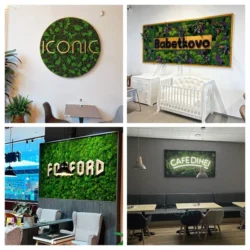
Moss wall with logo

Original price was: 1.60 $.Current price is: 1.44 $. Exc. Tax

Gift Card

1.00 $ Exc. Tax
-25%

Farn Moss | Decorative Moss – Box 2.5 kg

Original price was: 287.84 $.Current price is: 216.00 $. Exc. Tax
-30%

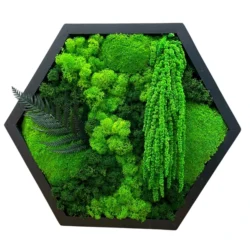
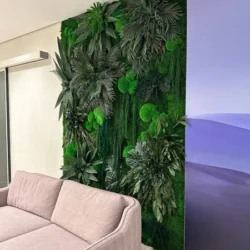
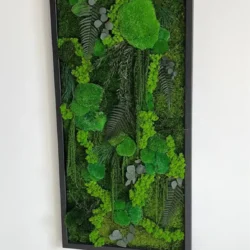
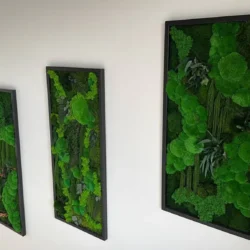
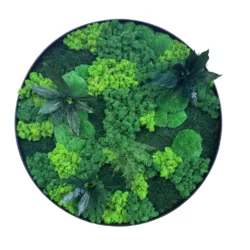
Moss Picture “Jungle Cascade” – Plants Edition

Price range: 259.20 $ through 2419.20 $ Exc. Tax
Select options This product has multiple variants. The options may be chosen on the product page
-30%

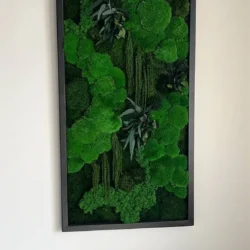
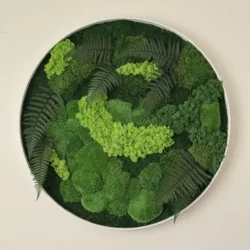
Moss Art “Boulder Moss Jungle Cascade” – Plants Edition

Price range: 259.20 $ through 2419.20 $ Exc. Tax
Select options This product has multiple variants. The options may be chosen on the product page
-30%

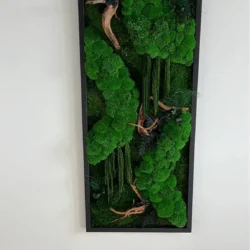
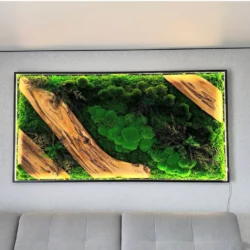
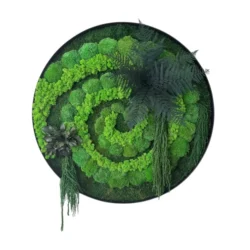
Moss Picture “Ball Moss Jungle Cascade” – Driftwood Edition

Price range: 259.20 $ through 2419.20 $ Exc. Tax
Select options This product has multiple variants. The options may be chosen on the product page
-34%

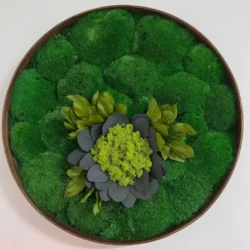
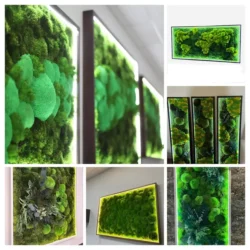
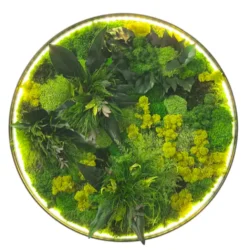
Round LED Moss Wall Art “Jungle Aura”

Price range: 360.00 $ through 2376.00 $ Exc. Tax
Select options This product has multiple variants. The options may be chosen on the product page
-21%

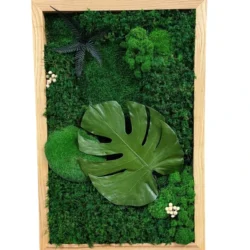
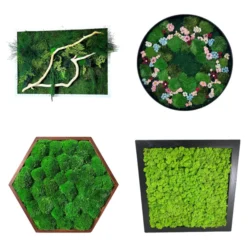
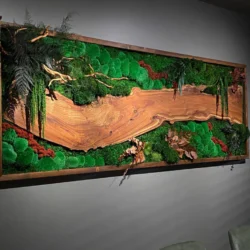
Moss Wall Art with Wood – Walnut Forest Landscape

Price range: 316.80 $ through 3024.00 $ Exc. Tax
Select options This product has multiple variants. The options may be chosen on the product page
-23%

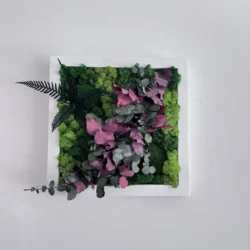
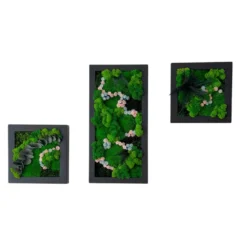
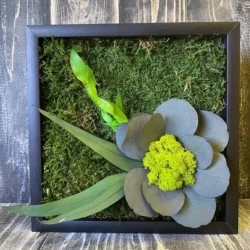
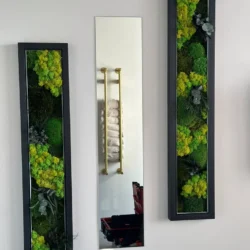
Wall Art Set: Floral Moss Trio with Frames

Price range: 288.00 $ through 2160.00 $ Exc. Tax
Select options This product has multiple variants. The options may be chosen on the product page

Preserved plant wall art is made from real ferns, eucalyptus, grasses and flowers that have been treated so they stop aging. They hang on a wall, need no water and no light, and look the same in five years as on the day they arrive.

What separates preserved plant wall art from our other work is the material mix. A panel filled entirely with lichen reads as texture — a surface rather than a set of plants. Once you put ferns and eucalyptus stems into it, individual leaves become legible and the piece reads as botanical: something that grew, with a recognisable form.

How Preserved Plant Wall Art Is Made

Plant preservation is not drying, and the difference is the whole reason this category exists.

Drying removes moisture. What remains is brittle, faded and fragile — a pressed fern crumbles if you handle it, and dried hydrangea loses its colour within a year. Preservation replaces the sap with a plant-based glycerin solution instead of removing it. The cell walls stay filled, so leaves stay flexible, colour stays saturated, and the material tolerates being touched.

What you lose is growth. A preserved fern will never unfurl another frond. What you gain is a decade of it looking exactly as it does now.

Fern Wall Art

Ferns are the backbone of our preserved plant wall art, and they preserve better than almost anything else. The frond structure — a central stem with regularly spaced leaflets — holds its geometry through the process, so a preserved fern still reads unmistakably as a fern from across a room.

In composition they do a specific job: they introduce line into a panel that would otherwise be all mass. A field of lichen has no direction. Lay three fronds across it and suddenly the eye has somewhere to travel. This is why so many of our mixed pieces use fern even when it is not the main material.

Eucalyptus Wall Art

Eucalyptus brings the one thing green material struggles with: a cool tone. Its silver-grey foliage sits against green without competing, and it stops a botanical panel from reading as a solid block of one colour.

Preserved eucalyptus also keeps a faint scent for the first months, which surprises people who expect preserved material to be inert. It fades, and it is not the reason to buy the piece, but it is real.

Structurally the stems are stiff and hold their line, so they work well where a composition needs a clear direction — long horizontal panels especially.

Jungle Compositions

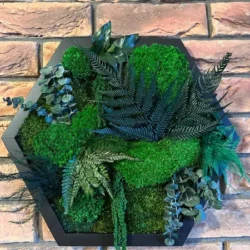
The densest pieces in this section combine several species into something closer to a section of undergrowth than to an arrangement: fern, eucalyptus, amaranth, ruscus, grasses and lichen layered until the backing is invisible and the surface has genuine depth.

These are the panels that work in commercial spaces. From two metres away a sparse composition reads as a few plants stuck to a board; a dense one reads as vegetation. Restaurants, lobbies and reception areas order the jungle versions almost exclusively, and homes tend to prefer the sparser ones where individual plants are legible.

The Plants We Work With

Plant What it contributes Colour
Fern Line and structure; the most recognisable form Mid to deep green
Eucalyptus Cool contrast, stiff directional stems Silver-grey to blue-green
Amaranth Soft plumes, movement, height Deep red, burgundy, cream
Ruscus Small firm leaves; fills gaps without bulk Glossy green
Ornamental grasses Fine linear detail, airiness Straw, pale green, cream
Lichen and moss The ground everything else sits against Full range, natural and dyed

Preserved Plant Wall Art Versus Artificial Greenery

The honest comparison for preserved plant wall art, since artificial botanicals cost less and the difference is not always visible in photographs.

  • Up close — artificial leaves have uniform colour and a repeating mould seam. Preserved material varies leaf to leaf, because it grew that way.
  • Under light — plastic reflects evenly and reads flat. Preserved foliage has matte and semi-gloss surfaces in the same piece.
  • Over time — good artificial greenery lasts indefinitely and gathers dust; preserved material lasts 7 to 10 years indoors and gathers dust at the same rate.
  • In the room — the difference registers with people even when they cannot articulate why. This is the whole argument, and it is the reason hotels and restaurants pay more for it.

Where Preserved Plant Wall Art Works Best

Preserved plant wall art suits anywhere a real plant would struggle: windowless meeting rooms, dim hallways, high shelves nobody can reach with a watering can, rented offices where nobody has taken responsibility for the greenery.

They also suit people who travel. A preserved panel does not care about a three-week absence, which is the practical reason many of our customers order one after killing a succession of houseplants.

Care and Lifespan

Preserved plant wall art lasts 7 to 10 years indoors. No watering, no misting, no feeding, no repotting.

Direct sunlight is the main risk and it affects plants more visibly than lichen — thin leaves fade faster than dense material, and a panel that has sat in a sunbeam shows it unevenly. Keep pieces off south-facing walls. Avoid high humidity, which softens leaf structure over months.

Dust with a cool hairdryer on the lowest setting. Do not wipe leaves with a cloth, wet or dry: preserved foliage is flexible but the attachment points are the weakest part of the whole piece.

Preserved Plant Wall Art: Frequently Asked Questions

Are these real plants?

Yes. Every element grew before it was harvested and preserved. Nothing is plastic.

Do they need water or light?

Neither. There are no roots and no photosynthesis.

How long do preserved plants last?

Seven to ten years indoors. Out of direct sunlight, at the upper end of that.

Do they smell?

Eucalyptus keeps a faint scent for a few months. Everything else is essentially odourless.

Will they attract insects?

No. There is no soil, no moisture and no living tissue — nothing an insect wants.

Are they safe for people with plant allergies?

They release no pollen and hold no soil, which removes the two usual triggers. Individual sensitivities vary, and this is not medical advice.

Can I request specific plants?

Yes, within what we have in stock at the time. Tell us before ordering.

Related Collections

For pieces built around preserved flowers rather than foliage, see moss and flower wall art. For panels where texture rather than botanical form is the point, moss wall art. For covering a whole wall, moss wall panels.