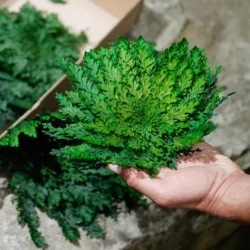
Preserved plants undergo an advanced non-toxic preservation process that replaces natural cellular sap with a specialized biological solution based on vegetable glycerin, water, and food-grade dyes. This method halts biological decomposition permanently while locking in cellular turgor. As a result, the foliage retains the tactile flexibility, natural weight, and physical texture of freshly harvested greenery without requiring soil, sunlight, or irrigation. The structure will not dry out, crumble, or produce dust under standard interior conditions.
These preserved specimens serve as primary elements in plant wall art, architectural installations, and decorative botanical displays. Because cellular metabolism is arrested, preserved botanicals do not attract common greenhouse pests, produce pollen, or emit spores. They provide long-term biophilic coverage in residential interiors, retail spaces, and corporate offices where low ambient light levels or limited maintenance resources make living plants impractical.
Technical Specifications and Optimal Interior Conditions
Preserved foliage requires specific atmospheric parameters to maintain its flexibility and pigment stability over years of display. Direct ultraviolet exposure degrades natural dyes over time, making indoor deployment away from intense sunlight necessary. The table below outlines the core environmental parameters and physical characteristics of preserved foliage.
Property
Specification Range
Operational Context
Ambient Air Humidity
40% to 70% RH
Prevents premature desiccation or excess moisture accumulation
Temperature Stability
15°C to 28°C (59°F to 82°F)
Avoids thermal breakdown of the glycerin matrix
Light Requirements
0 lux (No sunlight required)
Suitable for fully interior windowless rooms and basements
Irrigation Needs
Zero watering / zero misting
External moisture damages the preservation solution
Lifespan Potential
5 to 10+ years
Maintained through basic passive environmental control
Exceeding recommended indoor relative humidity thresholds can trigger surface condensation, while prolonged drops below 35% humidity may temporarily stiffen fragile leaf structures. Returning the ambient space to the standard 40% to 70% zone restores full structural suppleness without causing lasting damage to the botanical tissues.
Integration in DIY Plant Wall Art and Crafting
Architects and DIY crafters routinely combine preserved foliage with sheet moss, fern moss, and preserved flowers to establish multidimensional textures in vertical displays. The natural stems bond securely to wood, plywood backing boards, and acoustic fiber panels using standard moss adhesive or industrial polymer glues. Mechanical pinning or stapling also allows for rapid, secure layout modifications without structural breakage.
Structural Diversity: Mix varied plant structures like the Rose of Jericho, eucalyptus sprigs, and preserved ferns to generate natural shadows and visual depth across frames measuring 30 cm × 30 cm (12 in × 12 in) up to large commercial murals.
Zero Operational Maintenance: Eliminate the recurring plumbing, drainage line monitoring, and specialized light arrays demanded by living vertical gardens.
Simple Surface Care: Clear occasional dust buildup using a cold-air hair dryer on its lowest velocity setting or an electrostatic feather duster.
Fulfillment Details: Enjoy free shipping within 10–30 business days on every botanical set order.
Each batch of preserved greenery is systematically sorted to maintain consistent stalk density and coloration. Whether filling custom frames or layering bespoke decorative terrariums, these botanicals deliver dependable dimensional stability and enduring organic form across diverse climate-controlled spaces.