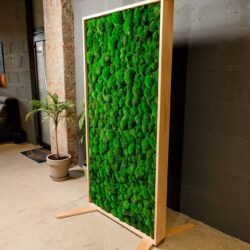
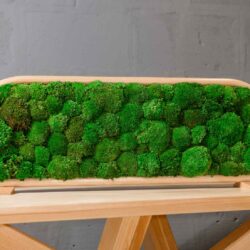
Moss Room Divider & Freestanding Partition Wall Ideas
Structure your expansive open space and invite nature into contemporary living rooms, corporate office suites, and hotel lobbies with our handcrafted moss room divider collection. Finding creative living room divider ideas to divide the space and create distinct zones without walls is essential in modern architecture. Whether seeking a stylish partition for living room zones across open living areas, a decorative wooden partition for acoustic room separation, or a freestanding room partition for privacy in a bedroom, each botanical partition functions as an organic privacy screen and sculptural room decor statement that preserves natural light and airy movement across the entire floor space.
Every wooden room divider and tall partition is handmade in Europe by artisans who handcraft each unit using real preserved moss, cushion mounds, and Scandinavian lichen. Unlike ordinary wall decoration accents, synthetic plastic imitations, or fragile rattan screens, our preserved greenery remains soft and vibrant for years with zero maintenance. Each custom moss divider panel is engineered for acoustic dampening, reducing ambient reverberation across your living space while functioning as a luxury moss wall and biophilic indoor room divider screen.
Modern Room Divider Panels & Wood Room Divider Craftsmanship
Our room divider panels combine solid wood stability with refined minimalist and rustic interior design:
- Freestanding Acoustic Partitions: Sturdy freestanding partition wall and wall room divider systems mounted on a robust wood divider base or metal frame on caster wheels.
- Architectural Wood Frame Profiles: Built from sustainable natural wood timber, engineered wood, and MDF core boards with wood finishes like natural oak, walnut, and black lacquer.
- Open Slat & Geometric Screens: Blending vertical wood slat details and cutout shoji screen aesthetics that allow daylight to filter through while ensuring needed privacy.
- Versatile Display Configurations: Available as a single panel accent near an entryway, or paired with an open bookcase, plant shelve, and bookshelf arrangement.
Office Partition Systems & Custom Installation Service
In busy commercial spaces where you need privacy and acoustic comfort, our modular wall divider and portable partitions offer an elegant, stable alternative to a temporary foldable folding screen with a simple hinge or sliding doors. Explore our shop collection of moss wall panels and home decor solutions with dedicated custom design service and easy hardware installation support. Shipped safely across the United States within 10 to 30 business days with free delivery.