Technical Specifications and Physical Properties
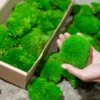
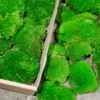
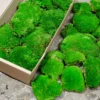
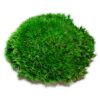
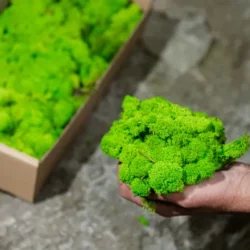
Harvested from Northern European forest floors, this preserved Ball Moss Size M (Cushion Moss or Pole Moss) provides structural depth for biophilic installations. The material consists of natural botanical mounds preserved through an eco-friendly saline and glycerin solution. This preservation process replaces plant moisture, arresting biological decay while keeping cellular flexibility and tactile softness intact for 7 to 10 years without requiring sunlight, irrigation, or soil nutrients.
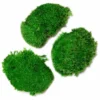
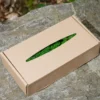
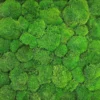
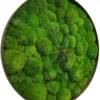
Each piece displays a dense, convex growth habit with a rich forest green hue and fibrous base. Dimensions per individual clump range from 5 to 15 cm (2 to 6 in) across. The complete medium box measures 80 x 40 x 20 cm (31.5 x 15.7 x 7.9 in) with an approximate gross weight of 2.4 kg (5.3 lbs). One full box yields sufficient botanical material to cover an area between 0.7 m² and 1 m² (7.5 and 10.8 sq ft), depending on packing density and vertical elevation.
| Specification |
Metric Measurement |
Imperial Measurement |
| Mound Diameter |
5–15 cm |
2–6 in |
| Box Dimensions |
80 x 40 x 20 cm |
31.5 x 15.7 x 7.9 in |
| Gross Package Weight |
approx. 2.4 kg |
approx. 5.3 lbs |
| Surface Coverage |
0.7–1 m² |
7.5–10.8 sq ft |
| Preservation Lifespan |
7–10 years |
7–10 years |
Applications in Moss Wall Art and Interior Installations
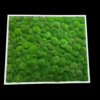
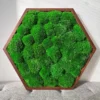
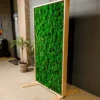
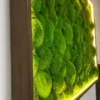
The pronounced convex profile of ball moss makes it an essential structural element in custom Moss Wall Art and multi-layered Plant Wall Art. When mounted on wood, acoustic backer boards, or canvas, the rounded cushions generate physical relief, casting natural shadows that break up flat surfaces. Designers frequently combine these mounds with flat moss or sheet moss to construct three-dimensional topographies replicating natural woodland landscapes.
Beyond visual dimensions, preserved moss provides functional interior acoustics. The micro-porous filament network dampens sound reflections by diffusing airborne sound waves across open-plan offices, conference rooms, and residential hallways. Because the moss remains static after treatment, it generates no spores, harbors no insects, and produces zero volatile organic compounds.
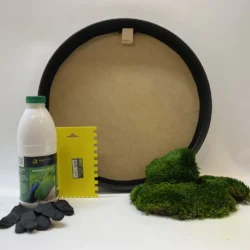
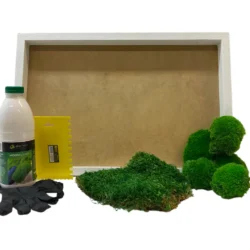
- Moss Wall Art framing: Secure clumps to birch plywood or MDF backing panels using solvent-free, non-toxic mounting adhesive.
- Custom spatial decor: Fill geometric bowls, stone planters, or craft spherical table centerpieces without drainage requirements.
- Acoustic enhancement: Construct high-density sound absorption panels for corporate lounges and home recording studios.
- Architectural signage: Form contoured green backdrops behind laser-cut metal lettering and corporate logos.
Environmental Requirements and Handling Guidelines
Preserved moss requires specific indoor climate conditions to preserve its supple texture. Ambient relative humidity must remain between 40% and 60%. If humidity levels fall below 40%, the moss filaments can stiffen; restoring ambient humidity naturally re-softens the structure without manual spraying. Never apply water directly to preserved moss, as water flushes out the preservation agents and causes discoloration.
Operate interior spaces within an ambient temperature range of 41 °F to 77 °F (5 °C to 25 °C). Keep the moss away from direct ultraviolet sunlight to prevent photo-bleaching. Maintain a minimum clearance distance of 1.5 m (5 ft) from operational radiators, HVAC vents, heating units, and fireplaces.
Compression can occur inside packaging during transit. Unpack the cushions and gently brush the mounds with a clean, soft-bristled brush or your hand against the lie of the fiber to restore natural loft. Routine cleaning requires only an occasional pass with a soft feather duster or an electric air duster set to low speed.







Reviews
There are no reviews yet.