Natural Composition of Ball Moss and Flat Moss
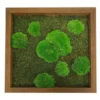
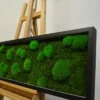
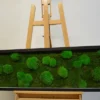
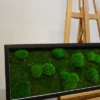
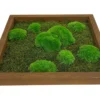
The Moss Wall Art with Ball Moss and Flat Moss combines two distinct botanical elements to establish physical depth on vertical surfaces. Real ball moss (cushion moss or pole moss) forms elevated, three-dimensional domes across a base layer of dense flat moss (sheet moss). This layered topography replicates forest floor vegetation, introducing organic green tones into indoor environments without artificial plastic substitutes.
Each panel undergoes a stabilization treatment where plant sap is substituted with a biodegradable mixture of glycerin and natural salts. This preservation halts biological decomposition while retaining the structural flexibility and cellular softness of fresh plants. The moss requires zero water, specialized horticultural grow lights, soil replenishment, or routine pruning.
Technical Specifications and Sound Absorption
Preserved vegetation panels function as passive sound dampeners in open-plan spaces. The three-dimensional mounds of ball moss disperse sound waves, while the dense flat moss base absorbs high-frequency reverberations and flutter echoes generated by hard surfaces like glass, tile, and drywall.
| Feature |
Technical Specification |
| Moss Varieties |
Preserved ball moss (cushion moss) and flat moss (sheet moss) |
| Frame Materials |
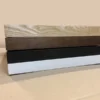
Solid ash or oak wood in Natural, Black, White, or Dark Brown finish |
| Available Dimensions |
From 11.8″ × 11.8″ (30 × 30 cm) up to 39.3″ × 78.7″ (100 × 200 cm) |
| Maintenance Profile |
100% maintenance-free; zero irrigation, misting, or direct sunlight |
| Acoustic Function |
Passive room acoustic reduction and echo dampening |
Frame Craftsmanship and Mounting Guidelines
Every wooden frame is cut, joined, and finished to house the preserved moss securely within a recessed perimeter. Integrated hardware on the rear profile allows for both horizontal and vertical mounting orientations, adapting to varied architectural layouts in residential hallways, conference rooms, and reception lobbies.
- Substrate Stability: The moss components are mounted on an engineered wooden backing board that resists warping under standard indoor humidity conditions between 40% and 70%.
- Light Exposure: Keep the panel away from intense, direct solar radiation or continuous UV exposure to preserve color consistency over time.
- Climate Control: Position the artwork at least 3 feet (approximately 1 meter) away from active heat sources, radiators, or air conditioning vents.
- Surface Cleaning: Remove accumulated room dust once or twice per year using a dry, soft-bristle brush or light compressed air on a low setting.
The botanical elements remain supple for 5 to 10 years when kept within standard indoor parameters. The tactile surface requires no routine upkeep, making it suitable for high-traffic corporate settings and private living areas.







Reviews
There are no reviews yet.